
Nigeria
Currency: Naira (NGN)
Timezone: West Africa Time (UTC+1)
Nigeria is situated in West Africa where it shares its land border in the west with the Republic of Benin, in the east with Chad and Cameroon, and in the north with Niger—popularly referred to as the “Giant of Africa” due to its resources and population. The country is the most populous in Africa, with a population estimated to be over 207 million. The country has a very diverse ethnic group with over 100 languages. However, the major languages spoken in the country are Yoruba, Hausa, and Igbo, with English regarded as the official language in the country. The climate of the country varies widely with equatorial south, tropical in the middle, and arid in the north, while the landscape consists of southern lowlands, plateaus, and hills in the north and mountains in the southeast.
The country adopts a federal presidential republic system of government comprising 36 states and Abuja the Federal Capital. The economy is heavily reliant on Petroleum and Petroleum Products as its main source of foreign exchange earnings and accounts for over 70 percent of government revenue. The challenges facing the country include erratic power supply, lack of infrastructure, terrorist insurgence, kidnapping, banditry, clashes between farmers and herders, pervasive corruption, internet fraud, and police brutality.
National Drug Distribution Guidelines (2nd edition)
Ministry of Health, Nigeria
Nigeria • 2012 • Health
National Oral Health Policy
Ministry of Health, Nigeria
Nigeria • 2012 • Health
National Information and Communication Technology (ICT) Final Draft Policy - 2012
Ministry of Communications and Digital Economy, Nigeria
Nigeria • 2012 • Information, Communication, and Technology
National Policy on Science, Technology and Innovation
Ministry of Science & Technology, Nigeria
Nigeria • 2012 • Information, Communication, and Technology
Central Bank of Nigeria Guidelines: Power and Airline Intervention Fund (PAIF)
Ministry of Energy and Natural Resources, Nigeria
Nigeria • 2012 • Energy
The Petroleum Industry Bill 2012
Ministry of Energy and Natural Resources, Nigeria
Nigeria • 2012 • Energy
Nigerian Electricity Regulatory Commission: Methodology for Estimated Billing, 2012
Ministry of Energy and Natural Resources, Nigeria
Nigeria • 2012 • Energy
Nigerian Electricity Regulatory Commission: Guidelines and Assessment Criteria for Fit and Proper Persons for Corporate and Individual Participation in Regulated electricity undertakings
Ministry of Energy and Natural Resources, Nigeria
Nigeria • 2012 • Energy
Nigerian Electricity Regulatory Commission (Methodology fix Estimated Billing) Regulations, 2012.
Ministry of Energy and Natural Resources, Nigeria
Nigeria • 2012 • Energy
Njgerian Electricity Regulatory Commission (Acquisition of Land and Access Rights for Electricity Projects) Regulations, 2012
Ministry of Energy and Natural Resources, Nigeria
Nigeria • 2012 • Energy
Nigerian Electricity Regulatory Commission (Embedded Generation) Regulations, 2012
Ministry of Energy and Natural Resources, Nigeria
Nigeria • 2012 • Energy
Nigerian Electricity Regulatory Commission (Independent Electricity Distribution Networks) Regulations, 2012
Ministry of Energy and Natural Resources, Nigeria
Nigeria • 2012 • Energy
Nigerian Electricity Regulatory Commission (Methodology tor the Determination ofConnection Charges for Electricity Supply) Regulations, 2012.
Ministry of Energy and Natural Resources, Nigeria
Nigeria • 2012 • Energy
Nigerian Electricity Regulatory Commission Regulations for Embedded Generation 2012
Ministry of Energy and Natural Resources, Nigeria
Nigeria • 2012 • Energy
Nigerian Electricity Regulatory Commission Regulations For Independent Electricity Distribution Networks 2012
Ministry of Energy and Natural Resources, Nigeria
Nigeria • 2012 • Energy
Ammendents to the Electoral Legal Framework
Independent National Electoral Commission, Nigeria
Nigeria • 2012 • Democracy and Governance
Independent National Electoral Commission Strategic Plan (2012-2016)
Independent National Electoral Commission, Nigeria
Nigeria • 2012 • Democracy and Governance
Biosimilar Guidance Document (NAFDAC)
Ministry of Health, National Agency for Food and Drug Administration and Control, Nigeria
Nigeria • 2012 • Health
Nigerian Institute of Animal Science Minimum Operating Standard for the feedmilling Industry
Ministry of Agriculture,Ministry of Rural development, Nigeria
Nigeria • 2012 • Agriculture and Rural Development
Minimum Operating Standard for the Poultry Processing Industry
Ministry of Agriculture,Ministry of Rural development, Nigeria
Nigeria • 2012 • Agriculture and Rural Development
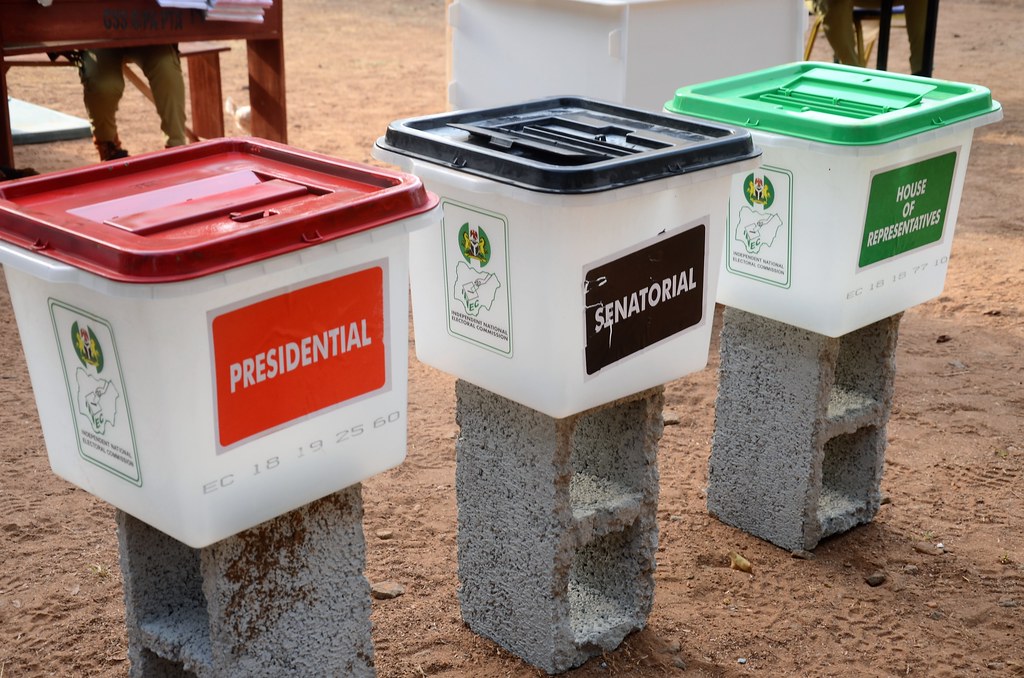
Political Parties, Presidential Candidates and the Electoral Act 2022
The Electoral Act 2022 seeks to update and standardize Nigeria’s elections. The introduction of technological changes such as an electronic database of registered voters and an electronic transmission system of votes is a welcome improvement. Restricting political appointees' involvement in the election process is also a step in the right direction. However, there is a fundamental issue with the new act — its endorsement of the indirect primary process.
Read More